
Out of imagination, ‘Bhotekhosi Nature Unstoppable Force’

Devi sapkota
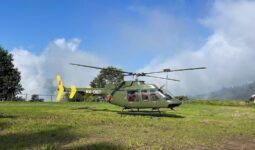
Dolma Ghale from Timure in Gosaikunda Rural Municipality was in Kathmandu on September 10. She was devastated after she couldn’t get any news about her mother, who was in Timure, following the flood in BhoteKoshi. With the help of relatives in the valley, she was able to reach Timure by military helicopter only after 2pm . She couldn’t get hold of her mother by phone. She didn’t know that her mother had gone to meet relatives via the mountain path. By chance, she got to meet her mother and bring her back, but she lost the house where she spent her childhood and many relatives.

It’s impossible to tell exactly where the collapsed house was. She is currently working as a counselor at Mustang Monastery in Swayambhu. Right now, 331 affected people from Rasuwa are living in this monastery. Those staying in shelters or rushing to hospitals have the same question: ‘Whatever has happened has happened, just give us safe shelter and arrange food for the survivors.’ On one hand, there’s the pain of losing the business they’ve been running for decades, and on the other, they seem to be losing their minds as family members are out of contact.

Gayatri Dhakal, 66, was standing next to photos of missing relatives posted around the Tribhuvan University Teaching Hospital, wiping her eyes at the thought of whether her missing relatives would be found. ‘I was at my daughter’s house in Kathmandu. We had come here for treatment, I survived, but many of my family’s relatives’ current status is still unknown,’ she said, getting emotional. ‘We never imagined that we would have to go through such an incident at this age. My sister’s husband and my brothers have lost a lifetime of earnings. The house was also swept away by the flood.’ The victims of the Bhotekoshi flood are now being housed in various holding centers in Rasuwa, Nuwakot, and Kathmandu, but some have left these centers. The affected people found in Nuwakot have started living in rented houses in Bidur Bazaar.
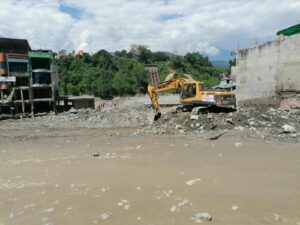
Yuban Prasad Adhikari, who was found in Trishuli, Nuwakot, was born and spent nearly 70 years in this place. He is not in a state to express in words the pain of losing dozens of neighbors and relatives who grew up with him. Pointing to the damaged area, he said, ‘There used to be over 30 shops along this road, but now neither is the structure here, nor are the relatives living in these houses.’ He added, ‘There were so many dreams and plans, but the sudden flood destroyed everything. We are not in a state to think about how to recover now.’

At the Bandre Monastery in Dhunge, Antar Lama witnessed the incident firsthand. After seeing the terrifying sound and the flood that came with black muddy water, he left his daily prayers and went outside. That day, when he urged the locals to move to a safe place, he recalled, the valley was so dry that people couldn’t even speak. ‘There were just the two of us in this monastery, screaming in confusion over what to do and what not to do,’ he said. The situation is still abnormal. The entire village is in mourning. The Lama has also lost dozens of relatives. Photos of neighbors and relatives he used to meet daily have been placed in the monasteries as a tribute. While trying to hold himself together and continuing his daily prayers, he said, ‘They won’t be coming back, those who survived are in pain. Even sitting in grief won’t do now.’ He doesn’t even have words of comfort.

Bhavani Adhikari’s family, who had been living in a rented house in Dhunge, spent a few nights under a tarpaulin after the flood on the 10th. The ground floor was filled with mud. After facing difficulties in taking care of her paralyzed father-in-law, the family of five, fearful, returned to the same house. ‘It was very difficult to take care of the sick, so after that we went back to the old place,’ she recounted.

Thousands of citizens are now homeless. The government needs to provide relief to those in distress and speed up rehabilitation. It is the government’s duty to help affected people return to normal daily life. Not only have they lost family members, but floods have also washed away the material wealth they’ve spent their lives earning. Everyone’s role is important in helping them forget mental and physical trauma and get back to a normal routine.

Importance of practicing about information and disasters In the Himalayan region, discussions about the risks that people in the area would face due to climate change have also been going on in Nepal for a few years. When debates and discussions were focused only in the cities, the citizens who were directly affected were left out. The Water and Meteorology Policy, 2024, mentions expanding a modern early warning system, but in reality, this has not been implemented, as evidenced by the devastating incident of the Bhotekoshi disaster and the human losses. It has been a month since the incident. More than 1,400 deaths have been confirmed, and over 6,000 people are still missing. Government data shows that more than 13,700 people have been rescued from the affected areas. The government has said that restoring the damage would require ten percent of Nepal’ stotal Gross Domestic Product (GDP).
According to former Principal Arjun Prasad Adhikari of Shree Chandi Basic School, even though locals received warnings about a big flood coming, they got the information late and couldn’t predict or believe it. There has been little discussion about the geography, landscape, and challenges of the area. There’s also been little talk about the mountains, glaciers, risks, and precautions. He pointed out that there needs to be a curriculum about geographical diversity and potential risks, saying, ‘The potential risks and necessary drills in this belt could have been planned; because even basic drills weren’t conducted, many lives were lost. The curriculum also failed to teach children how to practice safety while sitting in classrooms.’
There is often talk about the attraction of mountains, but there is less discussion about the risks they can pose. It is said that including this in the curriculum and conducting occasional exercises could help reduce human casualties. Basantraj Adhikari, president of DIPNET Nepal, says it is necessary to understand and make others understand about the mountains. ‘An effective task force to understand the mountains under Nepal’s leadership is needed. The local people in the affected areas should be regularly informed about what is happening there.’ The government should not delay in restoring the daily life of the affected people along with their permanent homes. He suggests that experts should be sent immediately to the source area of the Bhotekoshi flood to inform the government whether there are any additional risks.
Because we haven’t been able to get timely information about the condition of the mountains, glaciers, and glacial lakes that serve as the roof of the country, human losses have increased. Experts have been warning that the risks could grow in the coming days. Aside from a few limited days, there isn’t much discussion about the risks that mountains and glacial rivers can bring. The government shouldn’t delay in setting up a reliable information system with neighboring countries.
"तपाईका लेख रचना र सूचना ईमेल वा सिधै फोन गरेर हामीलाइ पठाउनुस । स्रोत गोप्य राख्दै प्राथमिकताका साथ प्रकाशित गर्नेछौं।" -प्रधान सम्पादक





तपाइँको प्रतिक्रिया